
Your ad report says 100 clicks. Did anyone order?

Impressions, reach, and clicks can’t answer that. Feast connects every campaign to the orders and revenue it creates in your restaurant—so the report ends in dollars, not metrics.

Book a short call and see if your restaurant is eligible.

The trail from ad to order, step by step

Most restaurant marketing loses the trail the moment someone clicks. Feast follows it through the door and onto the check.

  1. 01

    Run a real offer

    Feast puts a real menu item in front of locals on Facebook and Instagram. No awareness plays, no vanity campaigns. An offer a guest can act on.

  2. 02

    Every claim ties back to the ad

    When a guest claims the offer, Feast knows which campaign brought them in. Not modeled. Not assumed. Tracked.

  3. 03

    Revenue shows up next to spend

    The orders and checks those guests generate connect back to the campaign that created them, in one report: ad spend on one side, restaurant revenue on the other.

  4. 04

    Judge ads by sales

    A campaign that pays gets more budget. A campaign that doesn't gets improved or killed. Clicks never make that decision. Revenue does.

Two restaurants that see where every dollar came from.

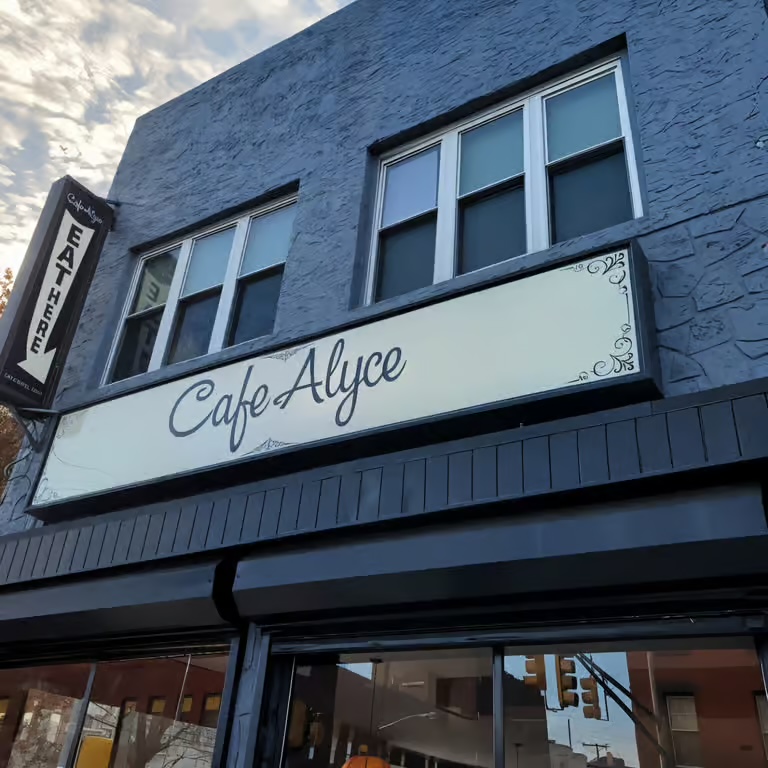
FIIZ found a winner on its first test. Alyce found one on its third. Both decisions were made from the same report: ad spend connected to restaurant revenue.

FIIZ Drinks

Revenue on the report, not a guess

FIIZ connected $25,923 in restaurant revenue back to $1,825 in ad spend.

2,942 new guests across the measured campaigns, each one tracked from the ad to the register. That’s how FIIZ knew its first offer was a winner instead of hoping it was.

14.2×tracked revenue / ad spend
2,942new guests
“From one restaurant owner to another—someone who personally runs seven restaurants every single day—this is the best marketing product I’ve come across in almost seven years of operating restaurants.”Jordan Olsen · Owner, Olsen Brands Management

Past performance does not guarantee future results.

Example: one quarter of campaigns“I think it worked”“It made $2,658”A direction for the system. Not a promise of specific results.

What the first 90 days look like.

You don’t need another dashboard of impressions. You need to know which campaign brought in paying guests and which one burned budget. Feast answers that one test at a time.

Week 101

Connect the system

Connect the restaurant, pick the goal, and agree on the first offers worth testing.

Weeks 2–402

Test offer 01

Produce the ads, run the offer, and measure it against real orders over a 14-day window.

Weeks 5–703

Test offer 02

Use what the first test measured to improve the offer or the ad, then test again.

Weeks 8–1004

Test offer 03

Use what the first two tests taught you to make the third better.

Weeks 11–1205

Keep a real-world buffer

Leave room for creator scheduling, approvals, or a test that needs a cleaner read.

Week 1306

Make the scale decision

Put more budget behind what the revenue numbers picked. If there isn’t a winner yet, the evidence plans the next tests.

The first quarter includes three offer tests, with time for scheduling and approvals.

Average salaried in-house performance marketer

$76,804 / year$19,201 in salary over 90 days · before benefits and hiring overhead

Meet Remy

An in-house marketer, without the $76,804 salary.

Remy—Feast’s AI marketer—builds the ads, runs the tests, and connects every campaign to the orders it brings in. $1,500 per quarter.

  • A short list of offers built around your margins
  • Ad production with real people, launch, and management
  • Every campaign connected to restaurant orders and revenue
  • Winning offers scaled; misses turned into better tests
  • Initial ad testing expected below $500 per month

$1,500 charged today. Subscription auto-renews every quarter. Ad spend is separate and stays under your control.

Meet your potential marketing hire and learn how to evaluate its first 90 days.

Meet your potential marketing hire

See if your restaurant is eligible.

Get a walkthrough of the report your current marketing can’t produce: ad spend connected to restaurant revenue.

What you’ll learnWhat Remy should deliver in 90 days—and how to measure it.

Ready when you are

Choose a time that works for you.The calendar opens over this page.

Frequently Asked Questions

How does Feast connect an ad to actual revenue?

Every offer runs with tracking built in: a guest claims it from a specific campaign, and the orders they place are connected back to that campaign. The report shows ad spend next to the restaurant revenue it produced.

What kind of offers does Feast test?

Feast builds offers around your margins and what a new guest can cost. Alyce’s winning test was a $30 Ribeye; FIIZ’s first tested offer proved profitable.

Does the $1,500 quarterly subscription include ad spend?

No. The $1,500 quarterly subscription covers Remy’s work. Initial ad testing is separate and is expected to stay below $500 per month, keeping the average starting budget under $1,000 per month.

What if the first offer doesn’t pay?

If an offer misses, the report says so plainly, and Remy uses what happened to improve the offer or the ad before the next test. Alyce found its winner on test three.

Do I have to learn another piece of software?

No. Remy is the marketer, not another marketing dashboard. You make the high-value decisions while Remy handles producing, running, measuring, and improving the offers.

Is revenue guaranteed?

No. Advertising always involves testing, and past results do not guarantee future performance. The point of the system is to measure what actually happens, protect the testing budget, and keep improving toward campaigns that pay.

How does billing work?

The Remy subscription is $1,500 paid quarterly and auto-renews every quarter.

Ad spend connected to restaurant revenue.

© 2026 Feast Analytics