“Right now we've doubled dinner.”
Feast tested three dinner offers and tracked sales against ad spend. Their ribeye campaign became profitable, so Alyce could scale it.

Text us your sales goal. We act as your in-house employee, produce your marketing, run your campaigns, track what turns into sales, and use those results to grow your restaurant profitably.
Trusted by 100+ restaurants nationwide


Text your sales goal. Approve what matters. Your CMO runs the marketing and keeps you posted.
“Right now we've doubled dinner.”
Feast tested three dinner offers and tracked sales against ad spend. Their ribeye campaign became profitable, so Alyce could scale it.

“I've had a ton of customers tell me that they're coming in just from the ad.”
Feast paired Melbourne’s lunch special with paid ads, giving local guests a reason to visit and the restaurant a way to track the response.

“I was surprised at how quickly it worked and how quickly we had people in here and how quickly we got a video.”
Feast automates your content production. We bring local content creators into your restaurant to film your ads, without you having to manage every step.

“You made it so easy.”
Feast texts you creator reminders and approval links, so you can prepare your team for visits and make decisions from your phone.

“You can actually figure out what's working.”
Feast connects campaigns to tracked visits and sales. Your CMO uses that evidence to decide what to keep running, change, or stop.

Tell Feast how much you want to grow. Your CMO builds a plan around your menu, your guests, and the opportunities in your restaurant.
Look at slower services, the dishes you want to sell, and what previous campaigns have taught you.
Turn that opportunity into an offer, an audience, and a campaign with a clear sales goal.
Set how much to spend on the test. You approve the strategy before production begins.
You set the goal and approve the plan.
Your AI CMO tests an offer, checks the sales, and uses the result to decide what to change or repeat. At Cafe Alyce, that meant three tries to find the winner.
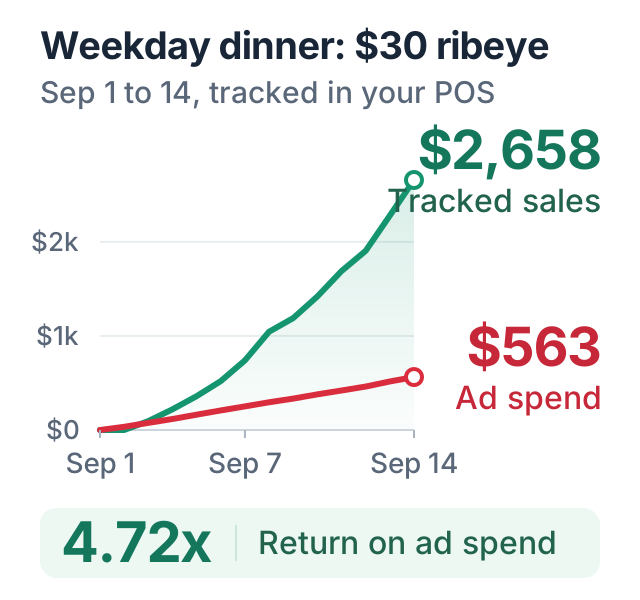
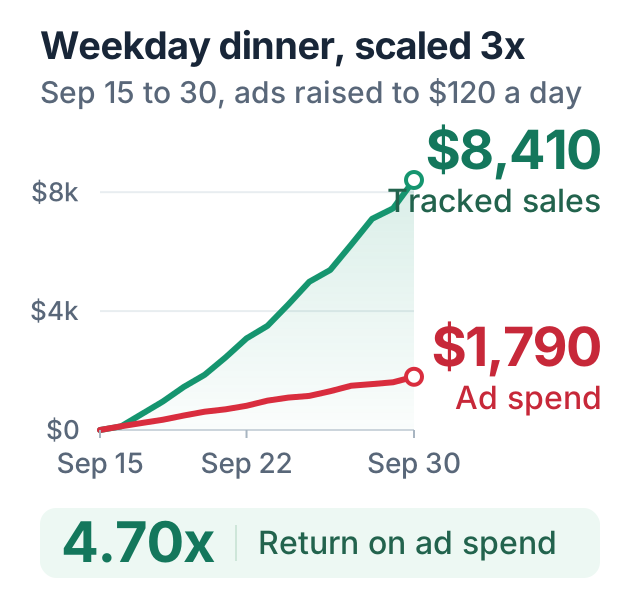
Alyce’s first two offers didn’t catch on. Feast kept testing. Tracking showed the third offer, a $30, 20 oz ribeye, was a profitable way to acquire customers. Alyce could scale with confidence.
Chicken schnitzel with house wine or beer.
Half off an appetizer with dinner.
A 20 oz ribeye dinner offer.
Initial test results. ROI is shown here as a revenue multiple: tracked revenue divided by ad spend, before food, labor, fees, and other costs. It does not measure net profit.
Rounded totals across the ribeye campaigns as of August 3, 2026. ROI is shown here as a revenue multiple: attributed revenue divided by ad spend, before food, labor, fees, and other costs. It does not measure net profit. Attributed gross revenue includes tax, tips, and visits beyond offer redemptions. Full-price sales lift comes from a separate before-and-after comparison.
“One table ordered four ribeyes just because they saw the ribeyes coming out.”
The offer put ribeyes on more tables, prompting nearby diners to order them at full price. Alyce’s full-price ribeye sales grew 131% as a result.
FIIZ gave guests a reason to visit with a free-drink offer. Over 90% of guests who redeemed it also bought something extra.
Across two campaigns, FIIZ spent $1,825 on ads and tracked $25,923 in revenue.
“This is the best marketing product I’ve come across in almost seven years of operating restaurants.”

Jordan Olsen · FIIZ Drinks customer story
Combined snapshot across two campaigns. ROI is shown here as a revenue multiple: tracked revenue divided by ad spend, before food, labor, fees, and other costs. It does not measure net profit or guarantee future results.
Taco Culture was getting ready to open. Feast built a launch campaign around the Taco Passport, text reminders for opening day, and a chance to win free tacos for a year.
People could sign up before the doors opened. The reminders gave them a reason to show up, and the passport gave them reasons to come back.
On opening night, Alonso sent the Feast team an update in Slack.
Taco Culture Opening Group totals across two subcampaigns; dollar totals rounded. ROI is shown here as a revenue multiple: tracked revenue divided by campaign spend, before food, labor, fees, and other costs. It does not measure net profit.
Feast adapts to your restaurant and works around the clock to profitably grow your restaurant.
Your CMO plans, produces, launches, and evaluates each campaign. Here’s how that work unfolds over the first 90 days.
Review your menu, margins, slower days, and past campaigns. Set the sales goal and test budget, connect supported ad and sales accounts, and agree on the first offer.
You approve the offer, budget, and direction. Your CMO turns that into the campaign brief.
Source local creators, coordinate the visit, and turn the footage into ad variations. Get your approval, launch the campaign, and follow a 14-day test where tracking is supported.
Which ads get a response, which responses become visits, and how much tracked revenue the campaign produces for its ad spend.
Review the offer, message, creative, and audience against the sales evidence. Choose what needs to change, produce the next campaign, and run another measured test.
Keep the promising parts. If clicks aren’t turning into visits or sales, test a different offer or message.
Compare what the first two tests taught us. Refine the offer and creative, coordinate new content when needed, and test the next strategy with the same sales measures.
Put more behind a promising campaign, stop a weak one, or test a different approach. Each decision starts with the results so far.
Use this buffer for creator scheduling, approvals, production delays, or a test that needs more time. Check the sales data and compare results across the campaigns.
The spend, tracked revenue, and limits of the evidence, so the next move is based on what happened in the restaurant.
Review the first quarter against your sales goal, campaign costs, and restaurant margins. Choose which campaigns deserve more budget, which need another test, and what your CMO should work on next.
A plan for the next quarter, grounded in your results. If a profitable campaign hasn’t emerged, the work is to keep improving the strategy.
Example rollout, not a promised result. Timing varies with setup, approvals, creator availability, and campaign performance. Tracked revenue is not profit.
Feast uses local content creators to produce ads for your restaurant and AI to automate the rest of the work. All you do is approve strategies and content.
You make the decisions, Feast handles all of the execution.
Feast does the research, campaign planning, creator logistics, editing, launches, day-to-day management, attribution, and reporting. You are not paying for access to more tools. You are handing over the job.
The sales target, budget, offers, creators, and anything your guests will see. Your CMO texts you when a decision needs your judgment, then keeps working.
No. Local creators capture your actual restaurant and human editors shape the work. AI automates the operational overhead without replacing the human element of hospitality and food marketing.
Where your POS and reservation integrations support it, Feast matches campaign responses to completed visits and settled checks. That is the evidence used to decide what to stop, change, or scale.
We start with a one-time setup to connect your marketing accounts and supported sales systems. Then just text or call us, like you would an in-house employee. Feast is proactive: we send updates, ask for approvals, and recommend the next move without waiting for you to check in.
Bring your sales target, slowest days, and current marketing. We'll show you what Feast would take over first.
Start with one part of your marketing.
Compare your past ads, posts, and promotions with POS sales, then work through what to keep, cut, or test next.
Explore the marketing auditGet content from local food creators. Remy handles outreach, scheduling, and collecting the files; you approve the creators.
Explore creator content